
Table of Contents
- Introduction
- Critical Certifications Every Serious OEM Demands in 2026
- Materials & Finishes: What Experienced Teams Actually Specify
- Advanced Capabilities That Deliver Real Competitive Advantage
- Life-Critical vs. Non-Life-Critical Components: How Risk Levels Drive Machining Requirements
- Overcoming the Real Challenges in Medical CNC Machining
- How to Choose (and Vet) the Right Contract Machine Shop
- Real-World Applications & Success Stories
- From Prototype to Full Production: The Scaling Playbook
- Supply Chain Risk Mitigation & Reshoring Advantages
- 2026 Trends That Smart OEMs Are Already Planning For
- Design for Manufacturability (DFM) Tips That Cut Costs Without Cutting Compliance
Introduction
The medical device industry in 2026 stands at a critical juncture. Rapid technological advancements, evolving regulatory requirements, and persistent supply chain pressures are reshaping how OEMs select and partner with contract manufacturers.
At OCD (Olson Custom Designs), we address these realities head-on. As an ISO 13485:2016 certified shop, we maintain 93%+ on-time delivery and specialize in precision CNC machining for both life-critical components (such as cardiac housings, defibrillator parts, and respiratory manifolds) and non-life-critical applications (including reusable surgical instruments).
Market Outlook
Market forecasts reflect continued momentum: The global medical devices market is projected to reach approximately $720 billion in 2026, growing from roughly $679 billion in 2025 at a CAGR of about 5.9–6.3% through 2035 (Precedence Research). North America remains the dominant region, with the U.S. market expected to expand steadily amid rising demand for precision components in cardiac, respiratory, orthopedic, and surgical applications.
Regulatory Landscape
At the same time, regulatory demands have intensified. The FDA’s Quality Management System Regulation (QMSR) took effect on February 2, 2026, aligning U.S. requirements directly with ISO 13485:2016 and emphasizing risk-based approaches, traceability, and validation throughout the device lifecycle (FDA.gov).
This harmonization streamlines global compliance but raises the bar for evidence and documentation. Add in ongoing challenges—geopolitical tensions, material volatility, and the push toward reshoring—and the need for reliable, compliant partners becomes even more pressing.
Guide Overview
This guide focuses on the practical aspects that matter most to experienced teams: certifications that deliver real value in 2026, materials and finishes with proven manufacturing processes, advanced capabilities that provide an edge, how risk levels (life-critical vs. non-life-critical) influence medical manufacturing, strategies for overcoming machining challenges, vetting suppliers effectively, scaling from prototype to full production, supply chain risk mitigation, emerging trends, and targeted DFM tips to reduce costs while preserving compliance.
We’ll draw on current industry data and real-world examples to help you evaluate partners and advance your projects more confidently.
Critical Certifications Every Serious OEM Demands in 2026
In today’s environment, certification is table stakes – but not all certifications are created equal. With the FDA’s QMSR now in force as of February 2, 2026, OEMs must verify that a contract manufacturer not only holds ISO 13485:2016 certification but actively applies its principles to reduce risk and ensure traceability.
ISO 13485:2016 establishes a comprehensive quality management system tailored to medical devices. It integrates risk management across design, production, and post-market activities; requires rigorous traceability from raw materials to finished parts; and mandates validation of processes to confirm consistent performance.
Key elements OEMs should evaluate during supplier assessments include:
- Management commitment — Demonstrated through resource allocation, regular management reviews, and integration of quality objectives into business strategy.
- Risk-based decision-making — Applied systematically to identify, evaluate, and control risks throughout the product lifecycle.
- Documentation and records — Including a quality manual, controlled procedures, work instructions, and electronic records that support traceability and audit readiness.
- Product realization controls — Covering design and development, supplier management, production, and service provision.
- Measurement, analysis, and improvement — Through internal audits, corrective and preventive actions (CAPA), and customer feedback mechanisms.
The QMSR incorporates ISO 13485:2016 by reference, with limited U.S.-specific additions (such as unique device identification and medical device reporting requirements). This shift moves away from prescriptive checklists toward a more flexible, risk-focused framework, but it demands stronger evidence during FDA inspections (FDA QMSR FAQs).
When auditing potential partners, go beyond the certificate and request:
- Current ISO 13485:2016 certification and recent audit summaries.
- Sample quality data packages (material certifications, first-article inspection reports, melt-lot traceability).
- Examples of validation protocols and electronic record-keeping systems.
- Evidence of post-market surveillance processes.
As the FDA has emphasized in its QMSR implementation materials, the regulation supports “leveraging existing systems” for manufacturers already aligned with ISO 13485, while reinforcing consistent, risk-driven quality practices.
At OCD, we operate fully under ISO 13485:2016, providing comprehensive traceability, tailored quality packages, and responsive engineering support – whether for rapid prototypes or scaled production runs.
| Certification Aspect | What It Means in 2026 | Why OEMs Prioritize It | What to Request in Audits |
|---|---|---|---|
| ISO 13485:2016 Core | Risk management, traceability, process validation | Aligns with FDA QMSR; enables global compliance | Current certificate + recent audit summary |
| Management Commitment | Leadership involvement and resource support | Ensures sustained quality focus | Sample management review minutes |
| Risk-Based Approach | Risks identified and mitigated throughout lifecycle | Prevents issues impacting patient safety | Excerpt from risk management file |
| Full Traceability | Material-to-part lineage, including melt lots | Required for recalls and submissions | Material cert + traceability example |
| Validation & Records | Documented proof of process effectiveness + electronic systems | Accelerates FDA reviews and submissions | Validation protocol + sample record |
A partner that truly embodies these elements doesn’t just meet requirements, they help streamline your regulatory pathway and minimize downstream risks.
Materials & Finishes: What Experienced Teams Actually Specify
Selecting the right material goes beyond basic biocompatibility. It’s about balancing performance, machinability, regulatory fit, and long-term reliability in the body or during repeated use. In 2026, OEMs focus on a narrow set of proven options that deliver consistent results under strict validation.
The core metals for CNC-machined medical components include:
- Titanium alloys (primarily Ti-6Al-4V ELI, per ASTM F136): The go-to for implants due to excellent osseointegration (bone bonding), superior corrosion resistance, and a strength-to-weight ratio that supports load-bearing applications like orthopedic plates, screws, and spinal cages. It’s lightweight and MRI-compatible, but machining it demands careful heat management to avoid tool wear and surface defects.
- Stainless steel (316L or 316LVM, per ASTM F138): Preferred for surgical instruments, fasteners, and non-implantable components where high strength, magnetic resistance, and cost-effectiveness matter. It offers outstanding corrosion resistance after proper finishing and is easier to machine than titanium.
- Cobalt-chrome alloys (per ASTM F75/F1537): Used in high-wear scenarios like joint replacements and articulating surfaces, thanks to exceptional durability and wear resistance. These are tougher to machine, often requiring specialized tooling.
- High-performance polymers (PEEK, ISO 10993 certified): Ideal for spinal implants, housings, and tools needing radiolucency (X-ray transparency) and a modulus close to bone. PEEK is lightweight, chemically resistant, and sterilizable, though it requires precise heat control during machining to prevent deformation.
Finishing is required for compliance and performance. Common processes include:
- Passivation (citric or nitric acid, per ASTM A967 or AMS 2700): Removes free iron from stainless surfaces to enhance corrosion resistance and promote a stable oxide layer.
- Electropolishing (often per ASTM B912 for stainless or similar specs): Provides a smoother, ultra-clean surface (Ra <0.4μm possible), reduces micro-roughness, improves biocompatibility, and enhances cleanability/sterility – critical for both life-critical and reusable parts.
These finishes align with ISO 13485 requirements for validated processes and help meet FDA/EU MDR demands for biocompatibility and contamination control.
| Material | Key Standard/Grade | Primary Strengths | Typical Applications | Machining & Finishing Notes |
|---|---|---|---|---|
| Titanium Ti-6Al-4V ELI | ASTM F136 | Biocompatibility, osseointegration, corrosion resistance | Orthopedic implants, dental, cardiac housings | High tool wear; dry machining preferred; electropolish for smoothness |
| Stainless Steel 316L/316LVM | ASTM F138 | Corrosion resistance, strength, cost-effective | Surgical instruments, fasteners, non-implants | Good machinability; passivation/electropolish standard |
| Cobalt-Chrome Alloys | ASTM F75/F1537 | Wear resistance, high strength | Joint replacements, dental prosthetics | Extremely challenging; specialized tools; electropolish for wear surfaces |
| PEEK | ISO 10993 certified | Radiolucent, bone-like modulus, lightweight | Spinal implants, surgical tools, housings | Heat-sensitive; special tooling; minimal finishing needed |
At OCD, we routinely work with these materials under controlled processes, providing full material certifications, traceability, and validated finishing to support your submissions and reduce validation time.
Advanced Machining Capabilities That Deliver Real Competitive Advantage
In 2026, basic CNC many times isn’t enough for the geometries and tolerances medical OEMs require. Advanced setups – particularly 5-axis milling, live-tooling turning, and integrated automation – enable single-setup production of complex parts, minimizing errors, reducing lead times, and improving repeatability.
Key capabilities that stand out:
- 5-axis milling (with pallet-pool automation): Allows simultaneous movement on five axes, ideal for contoured, organic shapes in cardiac housings, respiratory manifolds, orthopedic implants, and minimally invasive tools. Benefits include fewer setups (reducing tolerance stacking), superior surface finishes on undercuts/deep features, and shorter cycle times. Automation via pallet systems supports lights-out runs for consistent high-volume or mixed production.
- CNC turning with live tooling: Combines turning and milling in one machine (mill-turn centers), perfect for small-diameter instruments, threaded components, or hybrid parts. Live tools enable drilling, milling, and tapping without repositioning, boosting efficiency for surgical tools or connector housings.
- Metrology and in-process validation: Integrated CMM (coordinate measuring machines), vision systems, and automated inspection ensure parts meet sub-micron tolerances in real time. First-article inspections (FAI) and full quality data packages provide the documentation needed for regulatory submissions.
These features directly address common pain points: complex geometries that once required multiple machines now run in one; automation maintains consistency even as volumes scale; and advanced controls reduce scrap on expensive materials like titanium.
At OCD, our 5-axis mills with pallet-pool automation and live-tooling lathes handle everything from prototype cardiac components to production – delivering tight tolerances (±0.0001″ where needed) and 93%+ on-time performance through streamlined workflows.
These capabilities aren’t just technical upgrades – they translate to faster iterations, lower total costs, and fewer risks in your supply chain.
Life-Critical vs. Non-Life-Critical Medical Parts: How Risk Levels Drive Machining Requirements
Medical devices vary widely in risk, and that directly influences what a CNC shop must deliver. The distinction isn’t just regulatory – it’s practical: failure in a life-critical component can lead to severe injury or death, while failure in a non-life-critical one might cause rework, functional issues, or minor harm.
In FDA terms, this aligns with classifications:
- Life-critical/high-risk devices (typically Class III) sustain or support life, are implanted long-term, or pose unreasonable risk if they fail. Examples include cardiac housings, defibrillator components, respiratory manifolds in ventilators, orthopedic implants (plates, screws, rods), and pacemakers.
- Non-life-critical/lower-risk devices (often Class I or II) have moderate to low potential for harm. Examples include reusable surgical instruments (forceps, retractors, scalpels), diagnostic housings, and non-implantable tools.
The differences show up in every aspect of machining – tolerances, materials, finishes, validation, and quality controls. ISO 13485:2016 requires risk-based approaches (integrated with ISO 14971 for risk management), meaning higher-risk parts demand more stringent controls, documentation, and mitigation throughout the process.
| Aspect | Life-Critical (e.g., Implants/Cardiac/Respiratory Parts) | Non-Life-Critical (e.g., Surgical Instruments) |
|---|---|---|
| Tolerances | Sub-micron to ±0.0001″ (±2.5μm) routinely; zero deviation on critical features | Tight (±0.001″ common); functional tolerances allow for wear or assembly |
| Materials | Biocompatible titanium alloys (Ti-6Al-4V ELI), PEEK, cobalt-chrome; full long-term implantation validation and biocompatibility testing | Stainless steel (316L), aluminum, polymers; focus on sterilization resistance and durability |
| Surface Finish | Mirror-like/ultra-smooth (Ra <0.4μm, often 0.2–0.4μm for tissue integration; <0.05μm for articulating surfaces) to prevent irritation, infection, or biofilm | Smooth/burr-free (Ra 0.4–0.8μm typical) for cleanability, reusability, and corrosion resistance |
| Validation & Docs | Full first-article inspection (FAI), melt-lot traceability, biocompatibility testing, enhanced risk management files, detailed data packages for submissions | Standard FAI, lot traceability, sterilization validation; less extensive risk documentation |
| Quality Gates | In-process + final metrology (often 100% inspection), rigorous validation protocols | Sampling + final checks sufficient for most applications |
| Regulatory Intensity | Heightened ISO 13485 risk controls, potential PMA/510(k) support, full FDA/EU MDR alignment | General/special controls; lower scrutiny for Class I/II |
| Machining Challenges | Heat control (e.g., on titanium), complex geometries with no margin for error | Standard coolants viable, easier scaling and setup |
These escalations matter because life-critical parts require partners with proven experience in implantable work to avoid recalls, liability, or delayed approvals. Non-life-critical parts offer more flexibility for cost and speed but still demand full compliance to maintain sterility and performance.
At OCD, our ISO 13485:2016 processes handle both seamlessly. We deliver proven expertise in components for life-critical needs, alongside efficient production for surgical tools, with 93%+ on-time delivery and quality packages customized to the risk level.
Overcoming the Real Challenges in Medical CNC Machining
Even with the right capabilities, medical device manufacturing presents persistent hurdles that can delay projects or compromise quality. The key is addressing them proactively with proven strategies, especially when tolerances, materials, and risk levels are unforgiving.
Common challenges include:
- Machining tough materials like titanium: High heat buildup causes tool wear, work hardening, and surface defects – critical issues for implants where finish affects biocompatibility. Solutions: Use sharp carbide/ceramic tools, controlled feeds/speeds, flood coolant and vibration-dampening setups to maintain consistency.
- Holding micron-level tolerances under regulatory scrutiny: Sub-micron features on complex geometries can stack errors across setups. Mitigation: Single-setup 5-axis milling reduces repositioning; in-process metrology (CMM/vision systems) catches deviations early; thermal compensation on machines prevents drift.
- Contamination control without full cleanrooms: Particles or residues can fail biocompatibility or sterilization tests. Approach: Controlled-environment workflows, validated cleaning protocols, dedicated tooling, and post-machining passivation/electropolishing to ensure clean, stable surfaces.
- Scaling without quality drop-off: Prototypes may hit tolerances easily, but production volumes introduce variability. Strategy: Automation (pallet pools, lights-out runs) for repeatability; robust process validation and statistical controls; ongoing CAPA to refine as volumes ramp.
These aren’t theoretical – industry data shows that poor heat management in titanium can increase scrap by 20–30% on implants, while inadequate surface control raises biofilm risks on instruments (studies on Ra thresholds highlight Ra >0.8μm as a cleanability threshold). Risk-based thinking under ISO 13485 guides prioritization: higher controls for life-critical features.
At OCD, we tackle these daily through automation, metrology integration, and tailored processes – delivering reliable results whether for a complex cardiac housing or a batch of surgical forceps.
How to Choose (and Vet) Precision Machine Shops for the Medical Industry
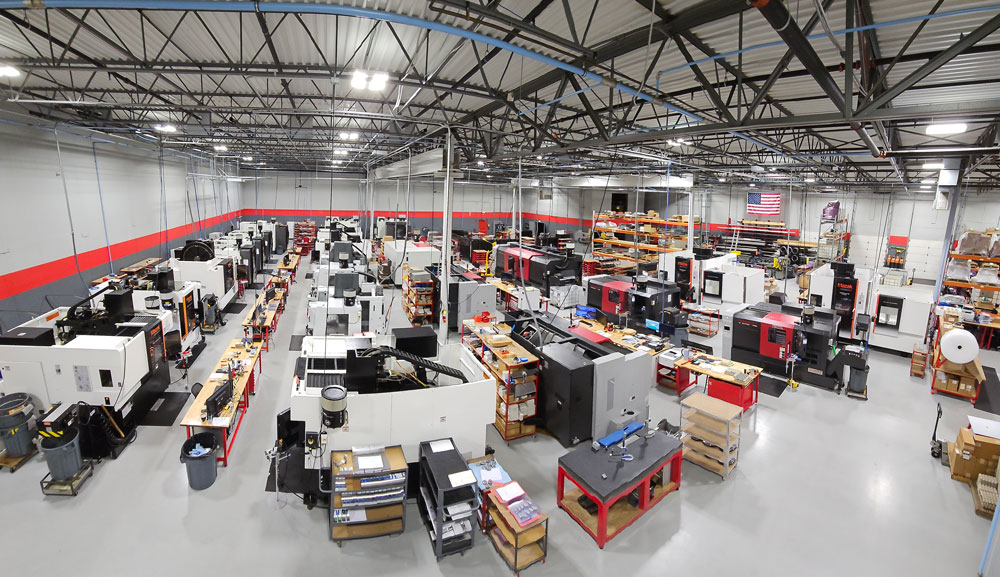
Selecting a contract machine shop for medical CNC work isn’t about finding the lowest bid—it’s about identifying a partner that consistently delivers compliant, high-precision parts while minimizing your regulatory and operational risks. In 2026, with the FDA QMSR fully in effect and supply chain pressures ongoing, OEMs are prioritizing suppliers who demonstrate proven performance over promises.
Use this updated checklist to evaluate and vet potential partners effectively:
- Regulatory certifications and quality systems: Confirm active ISO 13485:2016 certification (aligned with FDA QMSR) and request recent audit summaries. Look for evidence of risk-based controls, full traceability, and validated processes—not just a certificate.
- Technical capabilities and medical expertise: Verify they have the right equipment (e.g., 5-axis milling with automation, live-tooling turning) and experience in your risk tier (life-critical implants vs. surgical instruments). Ask for examples of similar parts they’ve produced.
- Verifiable performance metrics: Demand data on on-time delivery, first-pass yield, and scrap rates. Request sample quality data packages, including FAI reports and material certifications.
- Communication and responsiveness: Test their engineering support – how quickly do they respond to RFQs or DFM feedback? A 24-hour promise is a strong indicator; delays here often signal issues.
- Supply chain stability and risk management: Inquire about redundancy (multiple facilities or sources), reshoring capabilities, and how they handle material volatility or geopolitical risks.
- DFM and engineering collaboration: Look for proactive input on design for manufacturability to cut costs and lead times without compromising compliance.
- References and real-world proof: Ask for anonymized case studies or client references in your application area (e.g., cardiac or respiratory devices).
Red flags to watch for include:
- Vague or inconsistent traceability (e.g., no melt-lot examples).
- Hidden costs or unclear pricing structures.
- Slow or evasive responses to technical questions.
- Lack of automation or outdated equipment leading to variability.
- No medical-specific experience or weak quality documentation.
- Over-reliance on offshore sources without clear risk mitigation.
A strong partner turns these evaluations into advantages—streamlining your submissions, reducing validation time, and providing reliable scalability. At OCD, we emphasize these exact criteria: ISO 13485:2016 certified, 93%+ on-time delivery, rapid 24-hour engineering responses, and full quality packages tailored to your needs.
Real-World Applications
Medical CNC machining shines in applications where precision, biocompatibility, and reliability are non-negotiable. Here are key examples from typical work, focusing on both life-critical and non-life-critical components.
- Life-critical applications — Cardiac and respiratory devices often require complex geometries in titanium or PEEK, with sub-micron tolerances on mating surfaces and ultra-smooth finishes to ensure long-term performance.
- Orthopedic implants — Plates, screws, and rods demand osseointegration-friendly titanium with burr-free edges and precise threading.
- Non-life-critical applications — Reusable surgical instruments (forceps, retractors, scalpels) benefit from stainless steel’s durability and efficient scaling.
OCD has experience in life-critical and various other medical device manufacturing with customer’s giving us high praise for our collaboration and willingness to invest in capital equipment to achieve their production volumes.
From Prototype to Full Production: The Scaling Playbook
Transitioning from prototype to full production is one of the most critical – and often underestimated – phases in medical device development. What works flawlessly on a handful of parts can introduce variability, cost overruns, or quality issues when volumes increase 10x or more. The key is a structured, risk-based approach that preserves precision and compliance while optimizing efficiency.
Here’s a practical playbook used successfully CNC machining for the medical industry:
- Prototype validation and design freeze — Start with first-article inspections (FAI), full metrology reports, and material certifications. Conduct thorough DFM reviews to lock in features that scale well (e.g., avoiding overly complex undercuts that require multiple setups).
- Process development and qualification — Validate machining parameters (feeds, speeds, tooling) across multiple runs. Use statistical process control (SPC) to establish capability indices (CpK >1.67 typical for critical dimensions). Incorporate in-process checks to catch drift early.
- Automation integration — Implement pallet-pool systems or lights-out machining for repeatability. This minimizes operator variability and supports consistent output as volumes grow, essential for maintaining sub-micron tolerances on life-critical features.
- Quality gates and documentation — Build in staged approvals: prototype → pilot → production. Each gate includes updated risk assessments (per ISO 14971), CAPA reviews, and traceable records. Provide comprehensive quality data packages at every milestone to accelerate regulatory submissions.
- Volume ramp planning — Forecast lead times, material procurement, and capacity. Automation helps maintain on-time delivery even during ramps; monitor key metrics like first-pass yield and scrap rate to refine the process iteratively.
- Post-production monitoring — Establish ongoing surveillance (e.g., trend analysis on inspection data) to support post-market requirements and continuous improvement.
This approach reduces total cost of ownership by catching issues early—industry reports note that poor scaling can increase validation time and scrap by 20–30% if not managed proactively. At OCD, we guide clients through this with dedicated project management, automation-backed repeatability, and tailored quality packages – ensuring smooth ramps from prototypes to high-volume production without compromising compliance or performance.
Supply Chain Risk Mitigation & Reshoring Advantages
Supply chain disruptions remain a top concern for medical OEMs in 2026. Global events, geopolitical tensions, material shortages, and new tariffs have exposed vulnerabilities – 69% of U.S.-marketed devices are manufactured solely offshore, per recent analyses. This has driven major reshoring commitments, with companies investing over $100 billion in domestic production to enhance resilience.
Reshoring to U.S.-based partners offers clear advantages in this environment:
- Reduced exposure to international risks — Shorter, more predictable logistics minimize delays from tariffs, shipping bottlenecks, or geopolitical issues. Domestic sourcing provides greater visibility and control over critical components.
- Enhanced quality oversight and regulatory alignment — U.S. shops operate under direct FDA jurisdiction, facilitating easier inspections, faster issue resolution, and stronger alignment with QMSR/ISO 13485 requirements. This builds confidence in traceability and compliance for submissions.
- Faster iteration and responsiveness — Proximity enables quicker design changes, prototype reviews, and production adjustments—often cutting lead times significantly compared to offshore cycles.
- Intellectual property protection — Stronger safeguards against IP risks in certain regions, plus better enforcement of confidentiality.
- Long-term cost stability — While initial costs may rise due to labor and investment, reduced disruption-related expenses (e.g., expedited shipping, rework) and improved reliability often yield lower total ownership costs.
At OCD, our Indiana location supports these benefits: full ISO 13485:2016 compliance, domestic supply chain stability, rapid 24-hour engineering responses, and proven scalability – eliminating single-source risks while delivering the precision and documentation medical OEMs need in challenging times.
2026 Trends That Smart OEMs Are Already Planning For
The medical device landscape in 2026 is evolving rapidly, with technology and regulation converging to demand greater efficiency, intelligence, and traceability. Forward-thinking OEMs are investing in these areas to stay ahead of compliance pressures and competitive demands.
- AI-assisted quality inspection: AI-powered vision systems are now embedded in production lines, detecting defects that human inspectors might miss while reducing inspection time and costs. These systems analyze surfaces in real time, flag anomalies (e.g., micro-burrs or finish inconsistencies), and integrate with validated QMS for audit-ready records – boosting yield and right-first-time performance without sacrificing compliance.
- Hybrid additive + CNC workflows: For complex implants (e.g., custom orthopedic or dental components), near-net-shape additive manufacturing followed by high-precision 5-axis CNC finishing is gaining traction. This approach minimizes material waste, handles intricate geometries, and maintains surface integrity—critical for biocompatibility and performance.
- Predictive maintenance for uptime: AI-driven predictive analytics monitor equipment health to prevent unplanned downtime, optimizing machine performance and utilization. In regulated environments, this supports consistent production and helps maintain tight tolerances during high-volume runs.
- Tighter UDI traceability requirements: With EUDAMED operational and FDA QMSR in full effect, unique device identification (UDI) traceability is expanding – demanding electronic records from raw material to finished part. Shops must provide seamless data flows to support post-market surveillance and rapid recalls.
At OCD, our investments in automation, metrology integration, and process intelligence position us to support these trends delivering reliable, compliant parts while helping clients adapt to the next wave of innovation.
Design for Manufacturability (DFM) Tips That Cut Costs Without Cutting Compliance
Early DFM collaboration can significantly reduce machining costs, often by 15–40%, while ensuring parts remain fully compliant and producible under ISO 13485. The goal is to optimize design for CNC realities without compromising function, tolerances, or regulatory requirements.
Here are targeted, practical tips for medical components:
- Minimize setups: Design parts to be machined in as few orientations as possible (ideally one or two). Reducing setups from four to two can cut costs by 30–40% by eliminating repositioning errors and cycle time.
- Avoid deep cavities or thin walls: Features deeper than 4–5x the tool diameter increase tool deflection and machining time. Opt for shallower pockets or add access reliefs where possible.
- Standardize radii and chamfers: Use consistent internal radii (e.g., 0.5–1mm minimum) that match standard end mills—avoid sharp internal corners that require custom tools or EDM.
- Specify realistic tolerances: Apply tight tolerances (±0.0001″) only to critical features; looser ones on non-functional areas reduce machining time and inspection burden while maintaining compliance.
- Choose machinable features early: Avoid undercuts or complex contours that demand full 5-axis unless necessary as simpler geometries allow faster 3-axis production and lower costs.
- Incorporate material and finish considerations: Select alloys with good machinability (e.g., 316L over harder variants where feasible) and plan for post-processing (passivation/electropolish) to avoid redesigns.
These adjustments are most effective during initial reviews – our engineers provide detailed DFM feedback, identifying savings while preserving medical regulatory fit.